How to sell a hoarder house in Iowa

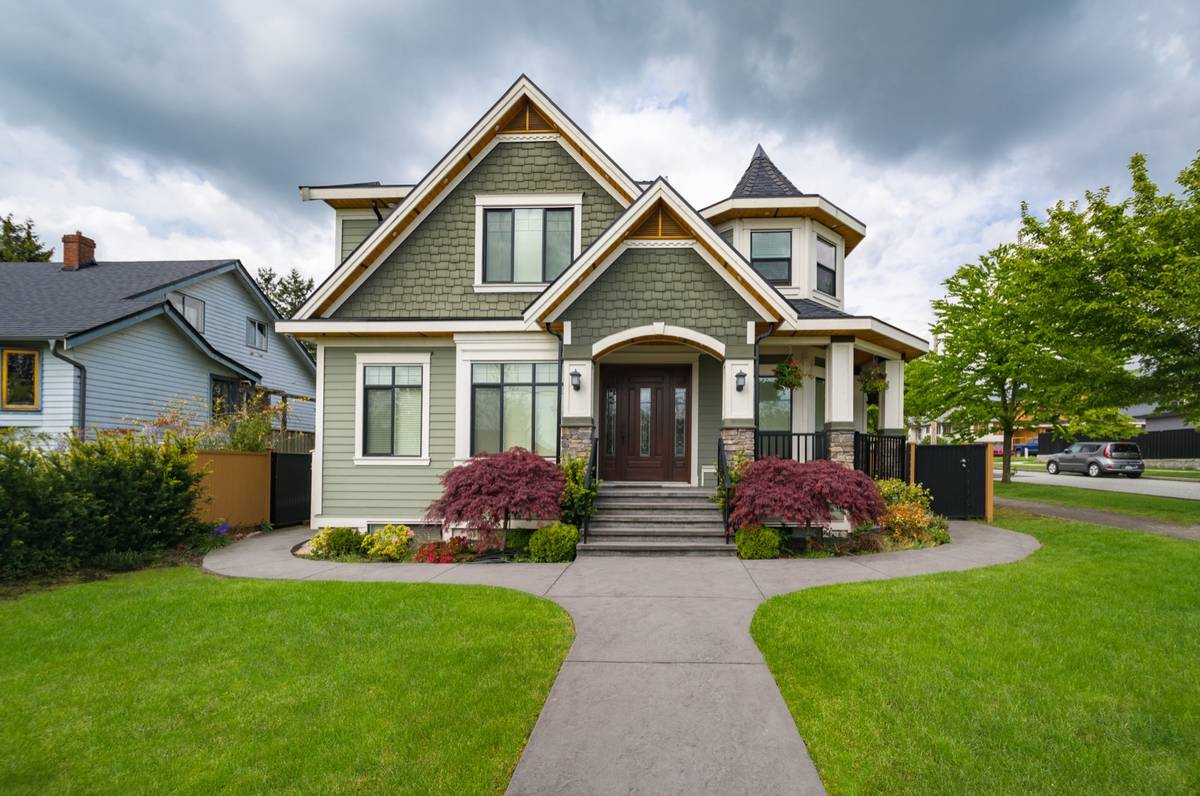
It starts in one room. The boxes take the spare bedroom, because that's what spare bedrooms are for, and then they take the hallway, then the kitchen table, and one day there's a path instead of a floor. If you're looking up how to sell a hoarder house, you already know the part that gets lost under all of it: there's still a house in there. Foundation, roof, furnace, a lot on a real street in a real Iowa town. And that house is still worth real money.
Here's the short version. You don't have to clean it out. You can sell it exactly as it sits, contents and all, to a cash buyer who prices the cleanout into the offer and handles it after closing. You walk through once, take what matters to you, and hand over the keys.
What actually blocks this sale is almost never the house. It's the belief that you have to empty it first.
You really don't have to clean it out
This is the sentence most people come here for, so I'll say it plainly: leave it. All of it. When I buy a house like this, the contents come with it. That's not a favor, it's just how the math works, because I'd rather run the cleanout with my own crew on my own schedule than ask a family to spend eleven Saturdays and a rented truck getting the house to a condition that a stranger will still want to renegotiate.
The advice you'll find elsewhere usually opens with "start decluttering one room at a time." That advice is written by people who have never stood in the doorway of a house where the boxes reach the light switch. One room at a time is how the house filled up. It's a rough plan for emptying it.
There's also the part nobody puts in a blog post. Houses get like this for reasons: grief, a diagnosis, a spouse who died and a person who kept every single thing they touched. Sometimes it's just twenty years and a big basement. I've walked a lot of these, and I've never once cared how it got that way. I care whether the roof is sound.
You're not selling a mess. You're selling a house that happens to be full. Those are two different transactions, and only one of them requires an apology.
Who actually buys hoarder houses
Three kinds of buyers, realistically. Local cash buyers and investors who renovate, which is what I do. Landlords hunting for a rental at the right basis. And the occasional contractor who wants a project and has a dumpster account. That's the pool. It's smaller than a normal sale, and that's the honest tradeoff.
Here's the piece the national sites skip, and it's the one that actually decides this: most retail buyers can't get a loan on the house even if they love it. A mortgage needs an appraisal, and an appraiser has to see the walls, the floors, the furnace, and the electrical panel. If the rooms aren't accessible, the appraisal gets flagged and the loan stalls. Government-backed loans are stricter still, since HUD sets minimum property standards on safety and sanitation that a packed house rarely meets. So it isn't that cash is easier. It's that cash is often the only money in the room that can actually close.
Anyone who buys houses in this condition and treats you like a burden is telling you something about them, not about your house. If a buyer makes you feel small on the walkthrough, that's a reason to call someone else. I work with homeowners one-on-one, and there's no national call center reading a script at you.
The right buyer has seen worse, says nothing about it, and starts talking about the furnace. That's what "no judgment" looks like in practice.
What a hoarder house is worth
More than you think, and less than Zillow says. Both things are true at once.
An honest cash offer isn't a number somebody feels their way to. It's arithmetic, and it runs the same direction every time:
| The math | What it means for your house |
|---|---|
| After-repair value | What the home sells for once it's cleaned out and fixed up, based on what similar homes on your street actually closed at. |
| Minus the cleanout | Dumpsters, labor, hauling, and the days it takes. On a full house this is real money, not a rounding error. |
| Minus the repairs | Whatever's been hiding under the contents. Flooring, drywall, sometimes a furnace or a subfloor. |
| Minus carrying costs | Taxes, insurance, and utilities the buyer pays while the work happens. |
| Minus the buyer's margin | The reason a buyer takes the risk instead of buying something clean. Any buyer who says this is zero is lying to you. |
What that math means in practice: the value that survives is the value that was never about the contents. Your lot doesn't care what's in the living room. Neither do your square footage, your school district, or the fact that you're eight minutes from a job center. That's usually the bulk of the number, and it's why these houses are worth more than the people living with them expect.
I won't publish a price here, because a number in a blog post is a guess about a house I haven't seen, and guesses are how people get talked into bad deals. I'll walk it and show you the subtraction. Same math I use on any house in any condition.
Bad buyers quote a price before they see the house. Good buyers show you the subtraction. Ask to see the subtraction.

The cleanout cost you're avoiding
The cleanout industry is a genuinely fascinating business, mostly because it's priced like a taxi ride you can't get out of. You pay by the dumpster, and a full house is never one dumpster. It's a dumpster, then a second dumpster, then a phone call that starts with "so, about the basement."
Add the parts nobody quotes you up front. Time off work. The pickup you borrow and the gas in it. Landfill fees on the things the crew won't take. Appliances and paint and old chemicals that need their own disposal. And the weekends, which is the cost that actually hurts, because you don't get those back and you spend them sorting through a life.
Sell it as-is and every line of that becomes my problem, priced once, up front, in the offer. That's the trade. You're not getting the cleanout for free, you're just not fronting it, financing it, or scheduling it. Same idea behind selling any Iowa house as-is: the work still happens, it just doesn't happen to you.
One warning, and it's the most useful thing in this article. Before anything leaves the house, walk it for the things that matter. Deeds. Titles. Savings bonds. Insurance policies. Cash in books, because there is always cash in books. Photos, letters, jewelry, the service medal in a drawer. Cleanout crews are paid to move volume, not to read what they're moving, and the regret I hear most from families isn't about money. It's about a photo album nobody thought to check for.
Take the photos, the papers, and the things you'd cry about. Everything after that is just weight.
How to sell it exactly as it sits
The whole process, start to finish:
- Call a local cash buyer. Describe the house honestly, including the condition. You will not shock anyone. Do not clean, stage, or apologize first.
- Let them walk it. Fifteen minutes, one person, no showings, no open house, no strangers in your kitchen on a Sunday afternoon. I need to see the bones and the mechanicals, not your belongings.
- Get the offer and the math behind it. Ask what they subtracted and why. A real buyer will answer that without flinching.
- Do your valuables sweep. Take your time here. This is the only step that can't be undone, and it's the only one I'd never rush a family through.
- Sign the disclosure honestly. As-is means you're not fixing anything. It doesn't mean you're hiding anything, and it shouldn't. The Consumer Financial Protection Bureau has plain-English guidance on the paperwork if you want to know what you're signing.
- Close and hand over the keys. Everything still in it stays. That's the point.
Timeline is usually two to four weeks, driven by the title work rather than the house. I buy across the Des Moines metro, Ankeny, West Des Moines, Urbandale, Ames, and the smaller towns in between, and you can see the full list of Iowa areas where I buy.
Take what matters. Lock the door. That's the whole job.
The bottom line
A full house is not a moral failing, and it's not a worthless house. It's a house with a job in front of it, and that job can belong to somebody else. Don't clean it out. Don't list it and watch financing fall apart twice. Get a number from someone who will walk it, show you the math, and say nothing about how it got this way.
If the house is in Iowa and you're ready to be done with it, tell me about it and I'll take a look. No cleanout, no repairs, no judgment. Or call me at 515-216-0652 and we'll talk it through.
Selling a hoarder house in Iowa: FAQ
Do I have to clean out a hoarder house before I sell it?
No. A cash buyer takes the house exactly as it sits, contents included. You walk through once, take what matters to you, and leave the rest. The buyer pays for the dumpsters, the crew, and the hauling out of their own pocket.
Who actually buys hoarder houses?
Local cash buyers and investors who renovate. They price the cleanout into the offer instead of asking you to do it first. Retail buyers rarely work here, because a house packed floor to ceiling usually can't pass the appraisal their mortgage depends on.
Can a buyer get a mortgage on a hoarder house?
Usually not. Most lenders need an appraiser to see the floors, walls, furnace, and electrical, and to confirm the home is safe and sanitary. If the appraiser can't access the rooms, the loan stalls. That's why cash is often the only funding that clears.
How much less is a hoarder house worth?
There's no fixed discount. An offer starts from what the home is worth fixed up, then subtracts the cleanout, the repairs hiding under the contents, the carrying costs, and the buyer's margin. The lot, the square footage, and the neighborhood still carry most of the value.
Do I have to disclose the condition of the house?
Yes. Selling as-is means you're not fixing anything, not that you can hide anything. Iowa sellers still complete a disclosure of known material defects. With a cash buyer this is simple, because they're walking the house with clear eyes and pricing what they see.